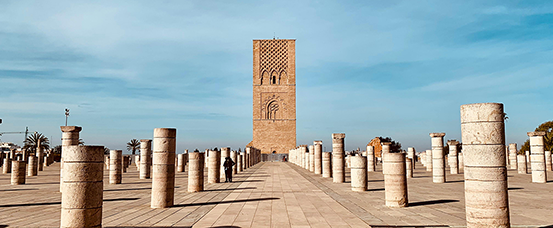
Policy Dialogue 2026 – Rabat, Morocco

2026 policy dialogue 'Reimagining displacement paradigms: a perspective from the Global South'

02th to 04th June, 2026  |  University Mohammed VI Polytechnic, Rabat, Morocco

About

Reimagining Displacement Paradigms: A Perspective from the Global South

2026 Policy Dialogue 'Reimagining displacement paradigms: a perspective from the Global South' aims to reflect through a Global South lens on shifts in the system for responding to forced displacement.

At a moment of unprecedented global displacement and rising challenges to the international protection regime, this policy dialogue specifically intends to:

  • Reinforce the normative foundations of international refugee protection and the protection of IDPs while identifying innovative responses to displacement.
  • Influence the future direction of the global refugee regime and response that re-centre protection, foster international solidarity and uphold the rule of law from a Global South perspective.
  • Centre the key role of localised and cross-regional knowledge and exchange.
  • Facilitate a South–South dialogue that brings together actors and partners to collectively develop a renewed, evidence-based vision for global responses that enhance the protection of refugees and IDPs.

The Policy Dialogue will bring together the 12 Research Chairs on Forced Displacement from across the Global South to be in discussion with high-level representatives from Moroccan government departments, global refugee-led organizations, UN institutions, key civil society partners and funding institutions.

This event is by invitation only.

Key Dates

2 June 2026
Internal meetings of the IDRC Research Chairs Network on Forced Displacement
3 June 2026
Policy Dialogue
4 June 2026
Funders' Roundtable

Host Institution and Collaborating Institutions

  • Host institution: University Mohammed VI Polytechnic (UM6P)
  • Collaborating institutions:
    • IDRC Research Chairs Network on Forced Displacement
    • International Development Research Centre (IDRC)
Committees

Local Organizing Committee

IDRC UM6P
IDRC UM6P
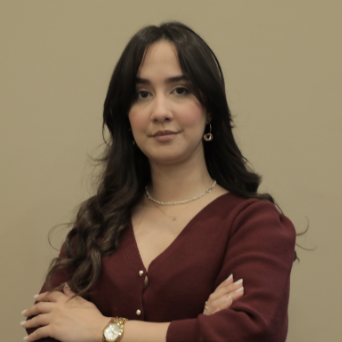
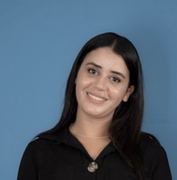
Sabrine Khihel
Sabrine Khihel
AIRESS

Scientific Committee

Members drawn from the IDRC Research Chairs Network on Forced Displacement and the International Development Research Centre (IDRC).

FAQ

Frequently Asked Questions

This depends on your country of origin. Please visit the consulate website for detailed information on visa types, required application documents, and the list of countries exempt from needing an entry visa to Morocco.

Yes, invitation letters can be provided upon request. Please contact us at [email protected] for further assistance.

No, the campus is strictly alcohol-free. Any alcoholic beverages brought to the event will need to be disposed of at the entrance. We kindly request participants to respect this policy.
Venue

Conference location

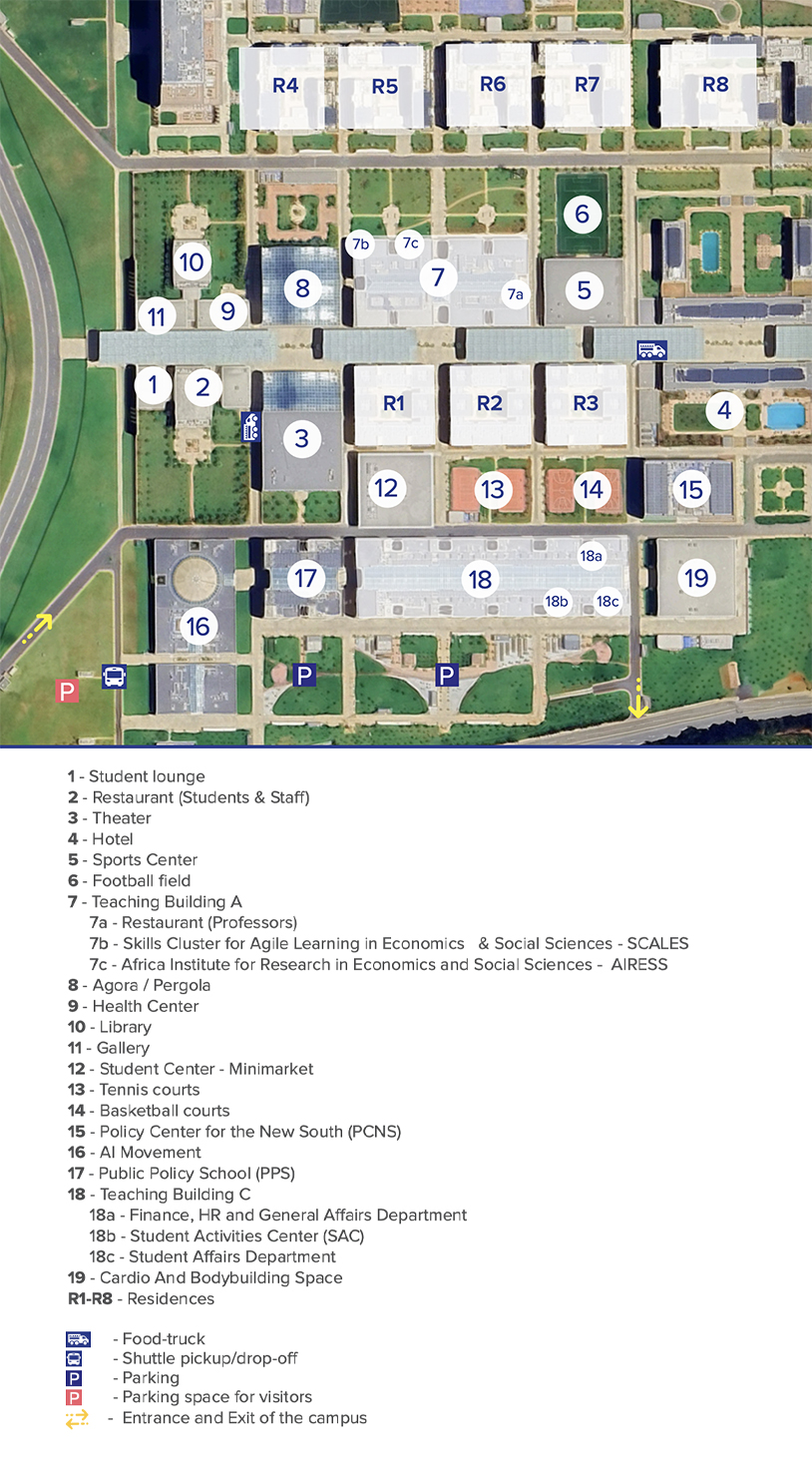
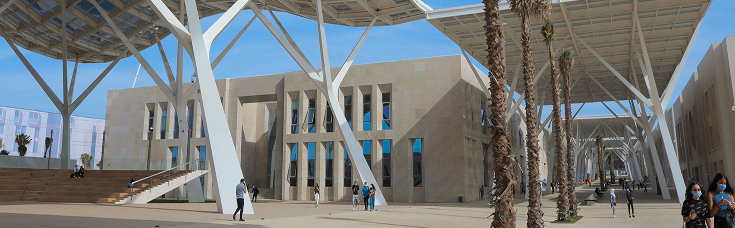
The Policy Dialogue will be held at the University Mohammed VI Polytechnic (UM6P), on the Rabat campus within the Social Sciences, Economics and Humanities Cluster. The cluster comprises:

  • FGSES – Faculty of Governance, Economics and Social Sciences (Bachelor's, Master's, Ph.D. programs).
  • AIRESS – Africa Institute for Research in Economics and Social Sciences (research-focused).
  • PPS – Public Policy School (executive education programs).

Each entity fulfills its mission using the knowledge and experience shared among a community of professors, researchers, scholars and public decision-makers.

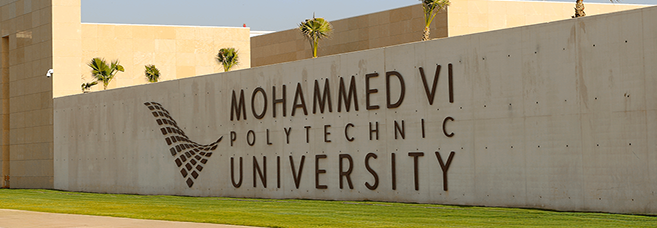
Mohammed VI Polytechnic University – Rabat Campus
Rocade Rabat-Salé, Rabat 11103
Campus view Campus building Campus architecture Campus grounds

Getting to the campus

First time visiting

To get to the campus from Rabat, you can use:

  • Public transportation: Take tramway Line 2 (L2) to its Sale Terminus (7 MAD), then transfer to bus line 201, which stops in front of the campus. The total bus ride (6,5 MAD) takes approximately 25 minutes. Small taxis are also an option, but the meter is unlikely to be used as the campus is outside the city. Be sure to negotiate the fare in advance, with 100 MAD as the maximum.
  • On-campus accommodation: If you are staying at our campus hotel, the venue is within walking distance.
Campus

Our campus

Discover
Living

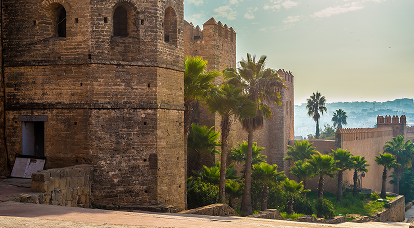
Living in Rabat

Discover

Downloadables

Programme

Key Dates

1 June 2026
Arrival & Dinner at the campus hotel
2 June 2026
Internal meetings of the IDRC Research Chairs Network on Forced Displacement
3 June 2026
Policy Dialogue (External)
4 June 2026
Chairs & Network Management — Debrief & Action Plan
Day 0 — Monday, 1 June 2026
All day
Arrival & Check-in to campus hotel
7:00 pm
Dinner at the campus hotel
Day 1 — Tuesday, 2 June 2026 Internal — Chairs & Network only
9:00 am
Opening
9:30 am
Regional presentation 1
10:30 am
Regional presentation 2
11:30 am
Coffee break
12:00 pm
Regional presentation 3
1:00 pm
Lunch
2:30 pm
Regional presentation 4
3:30 pm
Regional presentation 5
4:30 pm
Coffee break
5:00 pm
Discussion and planning for Day 2
6:30 pm
Closing
7:30 pm
Dinner at the campus hotel
Day 2 — Wednesday, 3 June 2026 External
8:30 am
Registration
9:00 am
Opening Remarks
Karim El Aynaoui — FGSES/UM6P & PCNS
Roula El-Rifai — IDRC
Myriam Cherti — FGSES/UM6P
9:30 am
Opening Keynote
Speaker
Barham Salih — UN High Commissioner for Refugees (Video message)
Discussants
Mustafa Alio — R-SEAT
Paula Banerjee — IDRC Chair
10:15 am
Dialogue 1 — The impact of reduced funding on refugee and IDP protection
Moderator
Abebaw Minaye — IDRC Chair
Speakers
Sawsan Abdulrahim — IDRC Chair
Katherine HarrisUNHCR Regional Bureau for the Middle East and North Africa
Johann Barbé — IOM Morocco
11:45 am
Coffee break
12:00 pm
Dialogue 2 — Challenges to the normative foundations of international refugee protection
Moderator
Sawsan Abdulrahim — IDRC Chair
Speakers
Mohamed El Hachimi — CNDH
Kizitos Okisai — Senior Legal Officer, UNHCR East-Southern Africa
Matthew Bird — IDRC Chair
1:30 pm
Lunch
2:30 pm
Dialogue 3 — Leadership and innovation in displacement responses in the Global South
Moderator
Myriam Cherti — IDRC Chair
Speakers
Khalid Zerouali — Moroccan Ministry of Interior
Ismail Chekkori — Ministry of Foreign Affairs, African Cooperation and Moroccan Expatriates
Mustafa Alio — R-SEAT
Mary Setrana — IDRC Chair
Houwayda Matta Bou Ramia — IDRC Chair
4:00 pm
Coffee break
4:15 pm
Closing Keynote
Speaker
Byanka Peter Ajang Nyibong
4:30 pm
Launch of the IDRC Chairs Declaration
Moderator
James Milner — Carleton University
Presenters
Paula Banerjee — IDRC Chair
Matthew Bird — IDRC Chair
5:15 pm
Closing Remarks
Roula El-Rifai — IDRC
Myriam Cherti — FGSES/UM6P
7:30 pm
Dinner off campus (transport provided)
Day 3 — Thursday, 4 June 2026
9:30 – 11:30 am
Chairs and Network Management (debrief & action plan)
Afternoon
Departure
Biography

Speakers & Participants

Meet the chairs, researchers, policymakers and advocates contributing to the 2026 Policy Dialogue on Reimagining Displacement Paradigms.

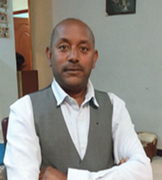
Abebaw Minaye

Abebaw Minaye

IDRC Chair · Addis Ababa University

Dr. Abebaw Minaye has a PhD in Social Work and Social Development. He is Associate Professor in Social Psychology and the Chair of the Forced Displacement and Migration Studies Center at the College of Education and Behavioral Studies at Addis Ababa University. He has 20 years of teaching experience in Psychology, Social Work, Research methods and Education. His current research focuses on migration governance and capacity building, IDP and refugee education in protracted situations, mental and physical health, and livelihoods, taking an intersectional approach. His research centre addresses the complex vulnerabilities faced by Internally Displaced Persons and refugees, with five priority areas: legal frameworks, governance and security; displacement economies and livelihoods; education; health and psychosocial support; climate change; and diversity and inclusion.
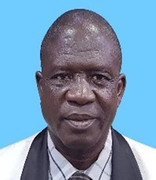
Alain Tiga Ouedraogo

Alain Tiga Ouedraogo

INSS / CNRST – Burkina Faso

Dr. Tiga Alain Ouedraogo is a senior researcher in sociolinguistics at the Institut des Sciences des Sociétés (INSS) of the CNRST of Burkina Faso and a lecturer at Joseph Ki-Zerbo University. He served as head of planning and financial resources mobilization at FONRID, then Director General of FONRID, and Technical Advisor to the Minister of Higher Education, Research and Innovation since June 2021. He is a Knight of the Order of Academic Palms. His work focuses on national languages, social cohesion, forced migration, protection of children and vulnerable persons, bilingual education, and education in emergencies. His current research addresses IDPs in Burkina Faso and the Sahel, including reintegration, host community relations, violence against IDPs, the nexus between displacement and natural resource management, and gender-specific solutions for socio-economic reintegration.

Amal El Ouassif

Amal El Ouassif

Policy Center for the New South

Dr. Amal El Ouassif holds a PhD in foresight analysis applied to climate migration from CNAM Paris and UM6P Rabat. She is an International Relations Specialist at the Policy Center for the New South (PCNS). Previously, she was a program coordinator at the Westminster Foundation for Democracy, a development policy consultant with GIZ in Morocco, and a bluebook trainee at the European Commission in Brussels. She held the interim chair position at FGSES, UM6P. Her research focuses on forced displacement in Morocco and North Africa, with attention to climate change and resource scarcity, gender, migrant and refugee decision-making, border securitization and EU–Africa migration relations.

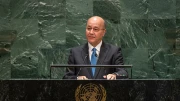
Barham Salih

Barham Salih

UN High Commissioner for Refugees

Barham Salih is the 12th United Nations High Commissioner for Refugees, elected by the UN General Assembly on 18 December 2025 and assuming office on 1 January 2026. Previously, he served as President of Iraq (2018–2022), twice as Prime Minister of the Kurdistan Regional Government (2001–2004; 2009–2012), and as Deputy Prime Minister of Iraq (2004–2009), concurrently Minister of Planning (2004–2006). He has served as Senior Fellow at the Belfer Center, Harvard Kennedy School and Leadership Fellow at the Middle East Institute. He is founder and Chairman of the American University of Iraq, Sulaimani (AUIS). He holds a PhD in Statistics and Computer Applications in Engineering from the University of Liverpool and a BSc in Civil Engineering from Cardiff University.

Byanka Peter Ajang Nyibong

Byanka Peter Ajang Nyibong

Water & Environmental Engineer · Refugee Advocate

Ms. Byanka Peter Ajang is a South Sudanese Water and Environmental Engineer, community leader, and refugee advocate. A recent graduate of the Faculty of Sciences and Technologies Mohammedia, she bridges technical infrastructure with humanitarian impact. Trilingual in Arabic, French, and English, she has served as a Protection Focal Point for Progettomondo's “Sports for Protection” initiative with UNHCR and is a FIFA Foundation certified football coach. Currently Vice President of the DAFI National Student Office, she champions Quality Education (SDG 4). She is dedicated to narrowing Africa's water-energy nexus and empowering displaced populations to implement the 17 Sustainable Development Goals.

Desiree Del Rosario Sosa

Desiree Del Rosario Sosa

INTEC · Dominican Republic

Dr. Del Rosario Sosa is an educator who graduated as a primary school teacher in 1984. She holds a PhD in Law from UASD and a Master's in Gender from INTEC. For the past 15 years she has been a full professor in Social Sciences and Humanities and coordinator of the Master's programme in Gender and Equality Policies in Education. She has participated in interdisciplinary research on violence, migration and legislation with a gender perspective, advises the Gender Equity Commission of the Chamber of Deputies, and consults internationally. Her work focuses on climate change and forced displacement and its impact on women and children, including indicators to measure climate impacts on vulnerable populations and the Bi-national Climate Change Coordination between Haiti and the Dominican Republic.

Fouad M. Fouad

Fouad M. Fouad

Liverpool School of Tropical Medicine

Dr. Fouad M. Fouad is Professor of Social Sciences and Global Health at the Department of International Health at Liverpool School of Tropical Medicine (LSTM). Previously, he was Associate Professor of Public Health at the American University of Beirut, where he led the IDRC Chair on Forced Displacement in the Middle East and co-directed the Refugee Health Program. He has served as commissioner on the UCL–Lancet commission on migration and health, the Lancet–AUB commission on Syria, and currently the Johns Hopkins–Lancet commission on health, conflict and forced displacement. Trained as a medical doctor, he served seven years as Director of the Primary Health Care Department at the Syrian Ministry of Health.

Hiram Angel

Hiram Angel

IDRC Chair · Mexico

Dr. Hiram Angel studied Political Science and International Relations at CIDE, holds a Master's in Government and Public Affairs from FLACSO Mexico, and a doctorate in Social Sciences from CIESAS-Occidente. He was a fellow at the Center for US-Mexican Studies of UC San Diego and at El Colegio de México. His work focuses on forced international migration, inclusivity and human rights, with a concentration on education and governance. His current research addresses migrant deaths and disappearances, displacement due to conflict and disaster, municipal-level causes of migration in Mexico, refugee and asylum applications in Latin America, organized crime and migration, and climate change. Other interests include sanctuary cities, returns and deportations, access to higher education, and the criminalization of migration.

Houwayda Matta Bou Ramia

Houwayda Matta Bou Ramia

IDRC Chair · Saint Joseph University of Beirut

Dr. Houwayda Bou Ramia holds a PhD in Social Work from the University of Montreal. She is coordinator of the PhD program in Social Work at Saint Joseph University of Beirut (USJ) and Chairholder of the IDRC Research Chair on Forced Displacement in the Middle East at USJ. She leads national-scale projects on irregular migration governance, IDP shelter management, frontline social work interventions in displacement contexts, and intercultural social work practice with refugees. Her work focuses on operational guidelines, contextualized models, training programs and institutional frameworks for inclusive, context-sensitive approaches to migration governance and practice-oriented social work in Lebanon.

Ismail Chekkori

Ismail Chekkori

Moroccan Ministry of Foreign Affairs

Mr. Ismail Chekkori is Head of the Department of Global Issues at the Ministry of Foreign Affairs, African Cooperation and Moroccan Expatriates since July 2017, where he manages a portfolio including Security and Social issues, Transnational Organized Crime, Counter-terrorism, NATO, Non-proliferation and Disarmament, as well as Human and Humanitarian Rights, Climate Change and Sustainable Development. He previously served as Minister Plenipotentiary at the Moroccan Permanent Mission to the UN in New York (2006–2013), during Morocco's chairmanship of the Security Council Counter-Terrorism Committee (2012–2013). He graduated from the École Nationale d'Administration in Rabat in Public Management (2005) and Diplomacy (1994).

James Milner

James Milner

Carleton University · LERRN

Dr. James Milner is Professor of Political Science at Carleton University and Project Director of LERRN, the Local Engagement Refugee Research Network — a 7-year SSHRC-funded partnership across Canada, Jordan, Kenya, Lebanon and Tanzania. He directs the Migration and Diaspora Studies program at Carleton, co-chairs the Global Academic Interdisciplinary Network, and is Canada's first De Mello Chair. He has conducted field research in Burundi, Guinea, Kenya, India, Tanzania and Thailand, and consulted for UNHCR in India, Cameroon, Guinea and Geneva. He is author of Refugees, the State and the Politics of Asylum in Africa (2009) and co-author of UNHCR: The Politics and Practice of Refugee Protection (2012).

Johann Barbé

Johann Barbé

IOM Morocco

Specialised in migration, development and humanitarian action in Africa, Johann Barbé began his career as a Security Risk Assessment Expert for the Sahel and Lake Chad regions with Gallice International. He then joined the European Commission's DG DEVCO (now DG INTPA) as a Project Coordination and Monitoring Officer for the EU Emergency Trust Fund for Africa. He subsequently joined IOM in Burundi as Coordinator of the Strategic Development and Programme Support Unit. In September 2022, he moved to Morocco as Programme Officer and Deputy Chief of Mission. He holds a BA in Geography and African Studies from SOAS and an MA in Communication and Development from the London School of Economics.

Karim El Aynaoui

Karim El Aynaoui

FGSES / UM6P · Policy Center for the New South

Dr. Karim El Aynaoui is Executive Vice-President of Mohammed VI Polytechnic University and Dean of its Humanities, Economics and Social Sciences Cluster. He is also Executive President of the Policy Center for the New South (PCNS). An economist, he worked at the Central Bank of Morocco (2005–2012) as Director of Economics, Statistics and International Relations, and previously for eight years at the World Bank as an Economist for MENA and Africa. He holds scientific and advisory positions at the Malabo Montpellier Panel, ISPI, the World Bank Institute for Economic Development, the Moroccan Capital Market Authority, Med-Or Italian Foundation and the Trilateral Commission. He holds a PhD in Economics from the University of Bordeaux and is Commendatore of the Order of Merit of the Italian Republic.

Katherine Harris

Katherine Harris

UNHCR Regional Bureau for the Middle East and North Africa

Katherine Harris has extensive experience with UNHCR, starting as an intern on resettlement in Cairo in 2004. Since then, she has worked for UNHCR in Kenya, Ghana, South Africa, Ethiopia, Sudan, Pakistan, Nepal and Sri Lanka across protection fields including resettlement, mixed migration, legal and social protection and accountability to affected people at UNHCR Headquarters in Geneva. She spent a year as Legal Services Director for an NGO providing legal advice to urban asylum seekers in Bangkok. She holds a Master's in humanitarian action. She is currently assigned to the UNHCR Regional Bureau for MENA based in Amman, with responsibility for protection and solutions across the MENA region.

Kizitos Okisai

Kizitos Okisai

Senior Legal Officer · UNHCR East-Southern Africa

Mr. Kizitos Okisai is a Senior Legal Officer for UNHCR based at the Regional Bureau for Eastern and Southern Africa in Nairobi, where he heads the Law and Policy Unit covering 25 countries. He has extensive experience in refugee protection, law and policy, refugee status determination and resettlement, having previously served for UNHCR in Hong Kong, Malawi, Sudan, Tunisia, South Africa and UNHCR's Headquarters in Geneva. He holds a Master's degree in Multi-Disciplinary Human Rights Law from the University of Pretoria and currently works and lives in Nairobi, Kenya.

Luisa Feline Freier

Luisa Feline Freier

IDRC Chair · Universidad del Pacífico

Dr. Luisa Feline Freier is Professor of Political Science with a focus on Latin America at the Freie Universität Berlin and Founding Director of the IDRC Chair on Forced Displacement in Latin America and the Caribbean at Universidad del Pacífico in Lima. Her research focuses on migration and refugee policies and laws in Latin America, south–south migration and the Venezuelan displacement crisis. Her current work addresses Venezuelan migrants and displacement, barriers to integration and inclusion, the development of migratory routes, trust in information sources, and the implications of asylum policies on migration routes.

Mary B. Setrana

Mary B. Setrana

IDRC West Africa Chair · University of Ghana

Dr. Mary B. Setrana is Director of the Centre for Migration Studies at the University of Ghana, Accra and the IDRC West Africa Chair on Forced Displacement. She has served as a technical advisor to the African Union Commission on migration governance and sits on advisory boards of the ARUA Centre of Excellence on Migration & Mobility and the Centre for Forced Displacement at Boston University. Her work examines how gender intersects with the drivers of displacement, climate change and statelessness. Her centre focuses on livelihoods, access to services and governance frameworks for displaced populations in West Africa, using a multi-disciplinary, gender-transformative and inter-sectoral approach including art-based methods.

Matthew D. Bird

Matthew D. Bird

IDRC Chair · Universidad del Pacífico

Dr. Matthew D. Bird is Professor in the Graduate School at Universidad del Pacífico. His research examines how critical and dynamic capabilities influence individuals' and organizations' decisions about human development, with focus on socioeconomic and social cohesion outcomes in migration, displacement, transitional justice and human trafficking. His applied research uses randomized trials and quasi-experimental methods to evaluate interventions. He consults on projects with the World Bank, IFC, UNHCR, IADB, World Food Programme, Sparkassen Stiftung, International Red Cross, Sesame Workshop, and the governments of Colombia, Honduras, Mexico, Nigeria, Peru and Uganda.

Mohamed El Hachimi

Mohamed El Hachimi

Director of Studies & Research · CNDH Morocco

Mr. Mohamed El Hachimi is Director of Studies and Research at the National Human Rights Council of Morocco (CNDH) and Professor of Political Science. He served as senior advisor to the CNDH President (2019–2021). He holds a PhD in Political Science from Mohamed V University, Rabat, and an MA in International Politics and Human Rights from City University, London. He has published widely (in English, French, and Arabic) on democratization, human rights, justice sector reform, civil society and new forms of activism in the Maghreb. He heads the international research group on “State, society and dynamics of political change in the MENA region”, created in 2017.

Mustafa Alio

Mustafa Alio

R-SEAT

Prior to joining R-SEAT, Mustafa Alio co-founded and led Jumpstart Refugee Talent, dedicated to the economic inclusion of refugees. In 2017 Jumpstart pioneered the Economic Mobility Pathways Program (EMPP). In 2019, Mustafa became the first refugee to formally represent Canada at the Global Refugee Forum. In 2021 he received the Meritorious Service Decorations (Civil Division) from the Office of the Governor General of Canada. He sits on multiple national and international advisory boards and has worked closely with governments, UNHCR and civil society to improve programming for refugees. His writing appears in The Independent, The New York Times, Stanford Social Innovation Review, Apolitical, The New Humanitarian and Forced Migration Review.

Myriam Cherti

Myriam Cherti

IDRC Chair · UM6P / Oxford COMPAS

Dr. Myriam Cherti is Visiting Professor at Mohammed VI Polytechnic University (UM6P) and Senior Researcher at the Centre on Migration, Policy and Society (COMPAS) at the University of Oxford. She has held senior roles at IOM in the UK and Morocco leading projects on migration governance, data and research; previously she worked with migrant and refugee communities in London for Migrants Organise and led policy-oriented research at IPPR. Her research spans climate change and forced displacement in North Africa; the adaptive capabilities of displaced populations in Morocco; and supporting African cities to develop evidence-based local responses. She holds a PhD in Migration Studies from the University of Sussex.

Nyi Nyi Kyaw

Nyi Nyi Kyaw

Marie Curie Fellow · University of Bristol

Dr. Nyi Nyi Kyaw is a Marie Curie Research Fellow at the University of Bristol's School of Sociology, Politics and International Studies and an Honorary Fellow at the Peter McMullin Centre on Statelessness, Melbourne Law School. He previously served as one of twelve IDRC Research Chairs on Forced Displacement in the Global South, based at Chiang Mai University in Thailand. He holds a PhD from the University of New South Wales. His research focuses on identity, citizenship, nationalism, forced migration and contentious politics, particularly in Myanmar and Southeast Asia.

Opportuna Kweka

Opportuna Kweka

IDRC Chair · University of Dar es Salaam

Dr. Opportuna Kweka is Associate Professor in the Department of Geography, College of Social Sciences, University of Dar es Salaam, Tanzania, and Chair of the Research Chair on Forced Displacement since November 2022. She holds a PhD in Geography from the University of Minnesota, an MA in Demography and a BA in land use, planning and environmental studies from the University of Dar es Salaam. She works on refugee governance, livelihoods, environment and durable solutions in Tanzania and East Africa. With four other IDRC-funded Chairs she has convened the first Global South Critical School of Thought on Forced Displacement.

Paula Banerjee

Paula Banerjee

IDRC Chair · University of Calcutta

Dr. Paula Banerjee obtained a PhD in 1993 from the University of Cincinnati. She is Professor in the Department of South and Southeast Asian Studies at the University of Calcutta. She was Vice Chancellor at Sanskrit College and University, Kolkata, where she helped fundraise a ~4 million USD budget, opened seven new postgraduate departments, and digitalized one of the country's richest manuscript collections. She has also served as Dean of the Faculty of Arts at the University of Calcutta. Her current research addresses race and gender from a post-colonial perspective and how the environment and natural resource extraction impact conflict. Her centre focuses on gender and forced displacement in contexts of rising authoritarianism and climate vulnerability.

Roula El-Rifai

Roula El-Rifai

Senior Program Specialist · IDRC

Roula El-Rifai is Senior Program Specialist with the Democratic and Inclusive Governance Division at Canada's International Development Research Centre (IDRC). Her work supports civil society actors in the Arab world advocating for reform, with a focus on forced displacement and youth civic engagement. She is an expert on the Palestinian refugee issue as part of the Middle East Peace Process and co-editor of three volumes on the subject. She holds an MA in International Relations from the University of Kent and an MSc in Rural Planning and Development from the University of Guelph.

Sawsan Abdulrahim

Sawsan Abdulrahim

IDRC Chair · American University of Beirut

Dr. Sawsan Abdulrahim (PhD, MPH) is Professor of Public Health in the Faculty of Health Sciences and IDRC Research Chair in Forced Displacement at the American University of Beirut, Lebanon. She is also a Visiting Scientist at the FXB Center for Health and Human Rights at Harvard. Since 2005, her research and practice have sat at the intersection of displacement, human rights and health, with a focus on forced and labour migrant women in the region. She is invested in critical refugee studies, centring the experiences of refugees and highlighting how historical and contemporary colonialisms, structural racism and other forms of violence shape forced displacement.

Shuchi Karim

Shuchi Karim

Feminist Academic · Bangladesh

Dr. Shuchi Karim is a feminist academic and researcher from Bangladesh. She completed her PhD at the Institute of Social Studies (ISS), The Hague, in 2012, specializing in Women, Gender and Development with a focus on sexualities. Her career combines development work, academia and activism, including positions at BRAC University's Institute of Educational Development, ISS, and Radboud University. Her research addresses gender and sexuality, sexual and reproductive health rights, transnational feminism and intersectionality. She directed the IDRC-funded project “Placement, Preservation, and Perseverance: Afghan at Risk Scholars, Activists and Students” (2022–2024).

Sirada Khemanitthathai

Sirada Khemanitthathai

IDRC Chair · Chiang Mai University

Dr. Sirada Khemanitthathai is a lecturer at the School of International Affairs, Faculty of Political Science and Public Administration, Chiang Mai University, and serves as Research Chair on Forced Displacement in Southeast Asia at the Regional Center for Social Science and Sustainable Development (RCSD). She holds a PhD in Politics and International Studies from SOAS, University of London. Her current projects focus on international and forced migration from Myanmar to Thailand, including studies of migrant workers, refugees, student migrants and middle-class migrants, and broader border-related issues such as border health, transnational politics and border security.

Khalid ZEROUALI

Khalid ZEROUALI

Wali Director of Migration and Border Surveillance - Ministry of Interior -

Mr. Khalid Zerouali is currently Wali, Director in charge of Migration and Border Surveillance at the Ministry of Interior. Previously, Mr. Khalid Zerouali was in charge of the Directorate of International Cooperation, the Monitoring and Coordination Center and the General Affairs Directorate at the Ministry of Interior. Before joining the Ministry, he worked at the aviation industry. Mr. Khalid Zerouali holds an Aerospace Engineering Degree and an Executive Master’s Degree in Business Administration. Mr. Khalid Zerouali is married and father of four children.

Contact

For any inquiries regarding the event, please contact:

Sabrine Khihel
Event Coordinator
Ms. Sabrine Khihel
[email protected]

LOCATION

Mohammed VI Polytechnic University – Rabat Campus
Rocade Rabat-Salé,
Rabat 11103


Phone : +212 (0) 530 431 217
Email : [email protected]